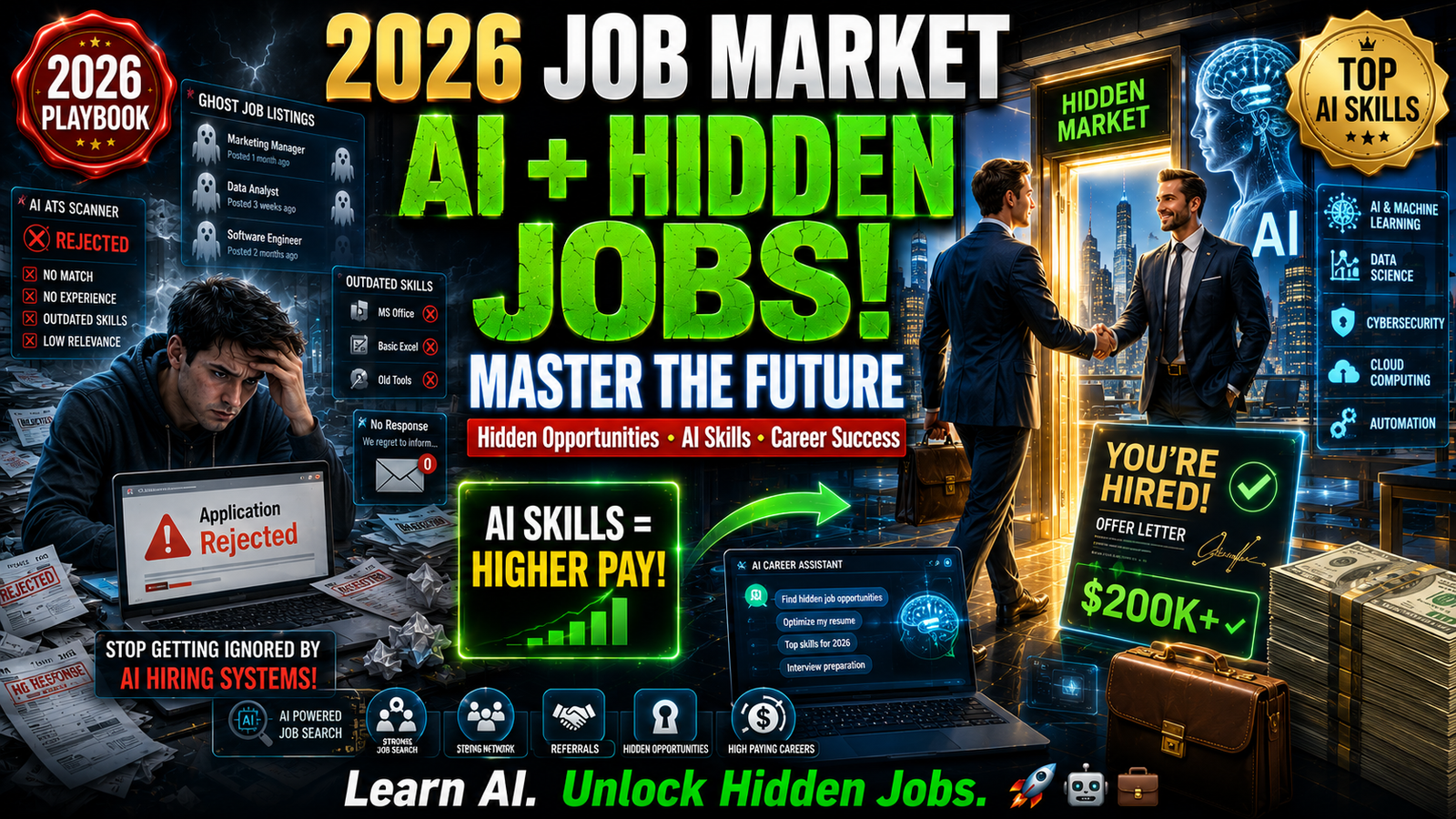
The 2026 job market is defined by what economists call a “low-hire, low-fire” economy. Firms are “worker hoarding”—holding onto the workers they have—but hiring has slowed as employers become more cautious . This creates a challenging environment where the bottom rung of the job ladder is effectively “broken” for new entrants .
The “Low-Hire, Low-Fire” Economy
In a “low-hire, low-fire” labor market, firms prioritize efficiency over expansion. The result is fewer new opportunities, less job-to-job switching, and greater difficulty for new entrants to gain a foothold .
The Numbers Tell the Story
From January 2025 through May 2026, job gains averaged just 40,000 per month . While recent data suggests some stabilization—job creation averaged +188,000 over March-May 2026—the underlying dynamic remains cautious . The hiring rate remains near its weakest since 2013, but layoffs remain historically low .
Young Workers Are Hit Hardest
Young adult workers typically rely on vacancy creation to enter employment. When hiring slows, they are the first to feel the effects . Since April 2023, the employment-to-population ratio of new-entrant college graduates has fallen 3.2 percentage points nationally . Even recent college graduates are facing longer job searches, higher unemployment rates, and lower employment-to-population ratios . As the St. Louis Fed notes, “a labor market can appear strong on the surface while becoming much less hospitable to new entrants” .
The Ghost Job Problem
Job seekers face an additional hurdle: “ghost jobs”—listings for positions that don’t actually exist. Industry data shows that between 18% and 22% of roles posted on Greenhouse, a major hiring platform, are ghost jobs at any given time .
Why Companies Post Ghost Jobs
According to a Resume Builder survey, companies post these listings to:
- Signal the appearance of growth to investors (66%)
- Convince current employees that workloads will ease (63%)
- Collect resumes for future needs (59%)
- Gather competitive intelligence about the application pool
How to Spot a Ghost Job
Key red flags to watch for:
- Posting age: Real roles are typically filled within 30 days; anything live 3+ months is likely a ghost job
- Vague, template-style descriptions: Active roles are specific about team context and priorities
- No named recruiter or hiring manager: Active roles usually have a point of contact
- Company recently announced layoffs or hiring freeze: Listings kept live are likely pipeline plays
The Hidden Job Market: Where Careers Actually Happen
Summer Delaney, founder and CEO of CollabWORK, describes the hidden job market as “the places where careers actually happen, not just where jobs are posted” .
The Three Layers of the Hidden Market
Layer 1: Trusted Professional Communities
Candidates make career decisions through Facebook groups, Slack communities, Discord servers, Reddit threads, industry newsletters, alumni networks, and professional associations. “When a job is shared in that context, it carries far more credibility” .
Layer 2: AI-Powered Discovery
ChatGPT, Gemini, Claude, and Perplexity increasingly rely on these same trusted sources to understand employers and recommend opportunities .
Layer 3: Existing Talent Databases
Former applicants, finalists, interns, and passive candidates already in employer ATS or CRM systems who have simply gone cold .
Practical Ways to Tap In
- Connect with employees inside target organizations before submitting applications
- Participate in professional communities where trusted recommendations are shared
- Leverage “weak ties”—acquaintances and indirect contacts often provide access to opportunities unavailable through close networks
- Build presence, not just applications: “Relationships are built by consistently providing value, not by repeatedly asking someone to apply”
Where Employers Are Hiring
Top Hiring Cities
A Robert Half survey of more than 2,000 U.S. hiring managers found that 66% plan to increase permanent hiring in the second half of 2026, up from 57% a year ago .
| Rank | City | Plans to Increase Hiring |
|---|---|---|
| 1 | Denver | 83% |
| 2 | Minneapolis | 76% |
| 3 | San Francisco | 73% |
| 4 | Houston | 69% |
| 5 | Seattle | 69% |
Strongest demand by specialization: Technology (78%), Healthcare (75%), and Finance and Accounting (74%) .
Cities on the Rise
LinkedIn’s “Cities on the Rise” list highlights smaller metros with growing job markets:
- Augusta, Georgia (#1): Defense, cybersecurity, medtech, data centers
- Richmond, Virginia: Finance, manufacturing, biotech
- Reno, Nevada: Manufacturing, technology
- Harrisburg, Pennsylvania: Healthcare, education, logistics
The AI Skills Premium
The most significant opportunity in 2026 is the explosion in demand for AI skills. According to PwC’s 2026 Global AI Jobs Barometer, which analyzed more than 1 billion job advertisements across 27 countries:
- Workers with AI skills earn a 62% wage premium over those without them
- Job postings requiring AI skills have grown 144% year over year—nearly eight times faster than the overall job market
- The premium reaches as high as 118% in consumer-facing roles
The Two-Track Labor Market
PwC’s analysis reveals that AI is driving a “two-track” global labor market :
- Professionalised roles—where AI acts as a “force multiplier” for human expertise—are seeing twice the growth in available jobs and 42% faster salary growth than democratised roles
- Democratised roles—where AI makes the role itself easier for non-experts to perform—are growing slower
The Entry-Level Shift
Perhaps the most significant finding: AI-exposed entry-level roles are now seven times more likely to require traditionally senior-level skills like leadership, judgment, and strategic thinking . These “seniorised” entry-level roles have grown 35% since 2019, while other entry-level roles have declined by 10% .
What Employers Want in AI Fluency
Across job postings, employers are looking for:
- Practical prompt engineering using structured frameworks
- Workflow automation via tools like Make.com or Zapier
- AI-augmented analytics in Power BI, Excel, or SQL
- The ability to critically evaluate AI outputs—hallucination detection now appears in job descriptions
Your Action Plan for 2026
1. Stop relying on online applications alone. The hidden job market accounts for a significant share of hiring. Focus on building presence in professional communities .
2. Tap into the hidden job market. Connect with employees at target companies before submitting applications. Participate in professional communities where trusted recommendations are shared .
3. Build your AI fluency. The 62% wage premium makes this non-negotiable. Focus on practical, demonstrable skills that employers can verify .
4. Target growth sectors and cities. Technology, healthcare, and finance and accounting lead hiring plans. Denver, Minneapolis, and San Francisco are top hiring cities .
5. Build presence, not just applications. In the hidden job market, “relationships are built by consistently providing value, not by repeatedly asking someone to apply” .