
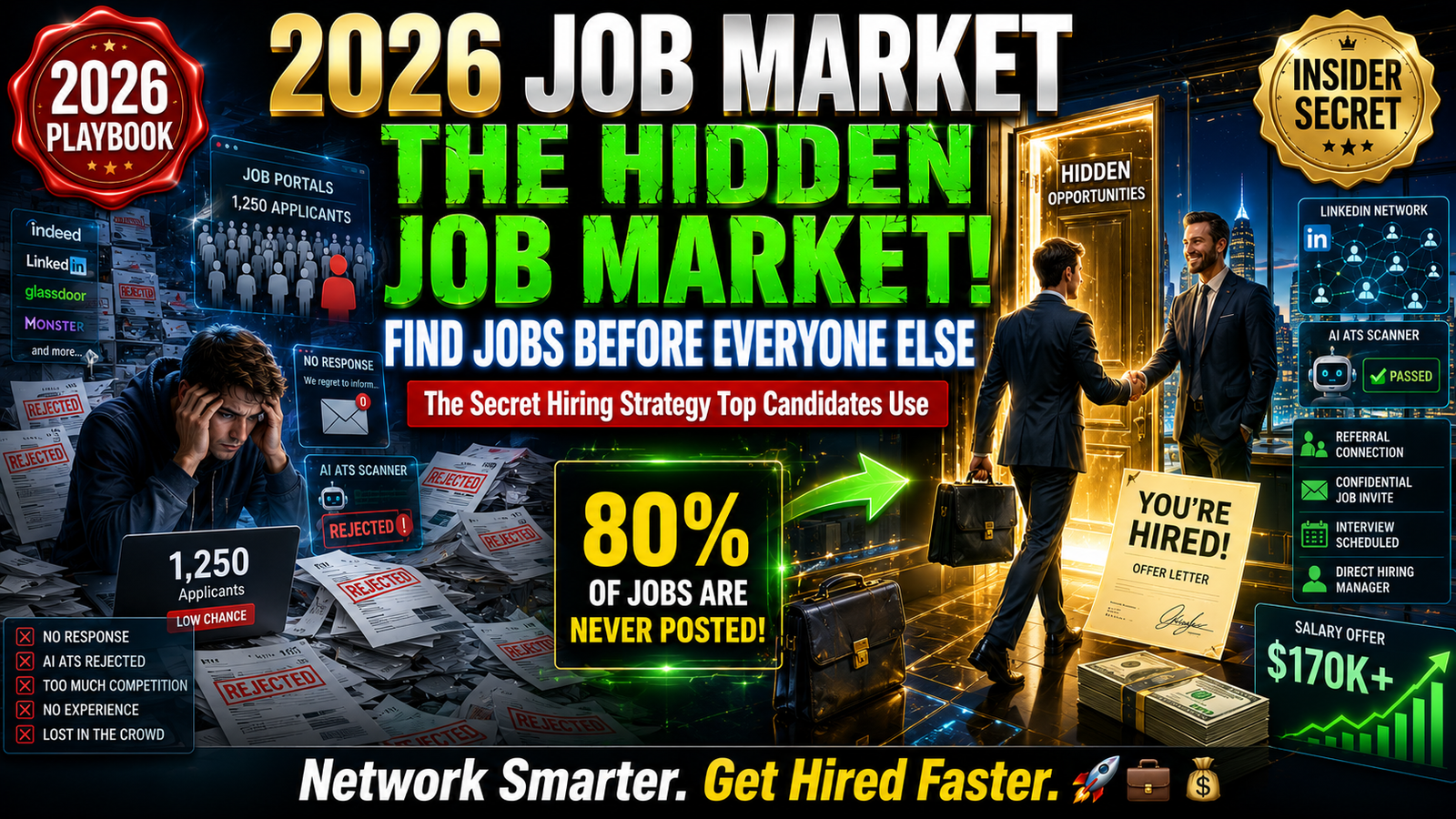
If you have been sending out applications and hearing nothing back, you are not alone—and it is not because something is wrong with you. The 2026 U.S. job market is defined by a “low-hire, low-fire” equilibrium that has fundamentally altered how people find work.
The core problem is not that companies are laying people off—layoffs remain historically low . The problem is that hiring has slowed significantly. In this environment, firms prioritize efficiency over expansion. This means the normal route to a job for new entrants—waiting for a vacancy to open up—has all but dried up.
The Federal Reserve Bank of Dallas has documented a stark divide: roughly 55% of the population exists in a primary sector with high wages and job stability, while all volatility—accounting for 61% of total unemployment—is concentrated in a secondary sector comprising just 14% of the population. The normal “trickle-down” mechanism where senior workers changing jobs creates entry-level vacancies has broken down. The transmission mechanism “seems either weak, lagged or broken.” This explains why even as some sectors hire, new entrants are being left behind.
The Ghost Job Problem
Job seekers face an additional hurdle: “ghost jobs”—listings for positions that don’t actually exist. An analysis of 176,268 live job listings found that 1 in 7 job posts were ghost jobs, with 4% active for four months or longer. Over half of wholesale jobs (51%) were ghost postings, and 21% of senior-level roles fell into this category.
A comprehensive study of 1,000 U.S. professionals found that 37% of job seekers are paying a “ghost tax”—out-of-pocket expenses like travel, childcare, and certifications chasing phantom listings. Nearly half (47%) have applied for roles they later discovered were nonexistent. The impact is staggering: 85.7% of tech workers and 87.5% of marketing professionals report ghost jobs. Over 50% of senior professionals report applying and interviewing for ghost jobs.
Why do companies do this? Corporations use job postings to gather competitive intelligence about the application pool and signal the appearance of growth.
Where the Jobs Actually Are
Top Hiring Cities
A Robert Half survey of more than 2,000 U.S. hiring managers found that 66% plan to increase permanent hiring in the second half of 2026, up from 57% a year ago.
| Rank | City | Plans to Increase Hiring |
|---|---|---|
| 1 | Denver | 83% |
| 2 | Minneapolis | 76% |
| 3 | San Francisco | 73% |
| 4 | Houston | 69% |
| 5 | Seattle | 69% |
Strongest demand by specialization: Technology (78%), Healthcare (75%), and Finance and Accounting (74%).
The Hidden Job Market: Where Opportunities Actually Live
Experts estimate that between 50 and 80 percent of all positions are filled through the hidden job market—referrals, recruiter outreach, and direct engagement with employers.
Summer Delaney, founder and CEO of CollabWORK, describes it as “the places where careers actually happen, not just where jobs are posted.”
The three layers of the hidden job market:
- Trusted Professional Communities: Facebook groups, Slack communities, Discord servers, Reddit threads, industry newsletters, alumni networks, and professional associations. People ask peers where to work and what it’s really like.
- AI-Powered Discovery: ChatGPT, Gemini, Claude, and Perplexity increasingly rely on many of these same trusted sources to understand employers and recommend opportunities.
- Existing Talent Databases: Former applicants, finalists, interns, and passive candidates already in employer ATS or CRM systems.
How to Tap Into the Hidden Job Market
- Connect with employees inside target organizations before submitting applications.
- Participate in professional communities—Slack groups, industry newsletters, alumni networks.
- Leverage “weak ties”—acquaintances and indirect contacts often provide access to opportunities unavailable through close networks.
- Connect with faculty—ask about past students in your field and request introductions to industry contacts.
- Leverage your hometown network—talk with family, neighbors, former teachers, and local professionals. Explore opportunities with small businesses, startups, nonprofits, or community organizations.
- Create your own opportunity—propose a short-term project that aligns with organizational priorities.
The Referral Advantage
A Glassdoor Community poll found that over 70% of workers are pessimistic about their job search prospects in 2026, citing repeated rejections and delayed responses. However, candidates who secured interviews through referrals were 35% more likely to receive job offers than those who applied online. About 64% of respondents said personal connections helped them advance their careers.
How the Hidden Job Market Works
The hidden job market is not one channel. It operates through three overlapping channels:
- Executive Recruiter Relationships: Retained recruiters are the primary gatekeepers at the senior level. If your name is not in their database with an accurate profile, you do not exist for that search.
- Warm Network Referrals: The most common path into a new position is a referral from someone who already knows the hiring manager—former colleagues who have moved into senior positions, board members, investors, or peers from industry associations.
- Proactive Company Targeting: Rather than waiting for a position to surface, proactive targeting means identifying employers where you would genuinely add value, researching the leadership gaps or strategic challenges those companies are facing, and initiating a conversation before any opening is formally defined.
The AI Skills Premium
The most significant opportunity in 2026 is the explosion in demand for AI skills. Two numbers tell the story:
- Workers with AI skills earn a 62% wage premium over those without them
- Job postings requiring AI skills have grown 144% year over year—nearly eight times faster than the overall job market
The premium has climbed fast: 25% in 2024, 57% in 2025, and now 62% in 2026, reaching as high as 118% in consumer-facing roles.
AI Engineer Compensation Gap
Among active AI Engineer postings, those requiring generative AI skills command a $140,000 median base salary, compared to $77,600 for the same title without AI requirements—a $62,400 gap.
Most In-Demand AI Skills for AI Engineers
| AI Skill | % of Postings |
|---|---|
| Machine Learning | 58.9% |
| Large Language Models (LLMs) | 55.5% |
| AI Agents | 47.3% |
| Generative AI | 40.6% |
| RAG (Retrieval-Augmented Generation) | 39.6% |
| Prompt Engineering | 27.8% |
Data Scientist Compensation Gap
Among Data Scientist postings, those requiring new-wave AI skills command a $130,000 median base salary, compared to $98,000 for non-AI roles—a $32,000 gap.
Your Action Plan
1. Stop relying on online applications alone. The hidden job market accounts for 50-80% of hiring. Referrals are 35% more likely to lead to job offers than online applications.
2. Tap into the hidden job market. Connect with employees inside target organizations before submitting applications. Participate in professional communities—Slack groups, industry newsletters, alumni networks.
3. Develop AI fluency. The 62% wage premium makes this non-negotiable. Focus on understanding how to direct AI tools and evaluate their output critically.
4. Target growth sectors. Technology, healthcare, and finance and accounting lead hiring plans.
5. Consider top hiring cities. Denver, Minneapolis, and San Francisco lead hiring plans.
FAQs
Why is it so hard to find a job right now? The US is in a “low-hire, low-fire” economy. Hiring rates are near recession levels while layoffs remain low. The bottom rung of the job ladder is “broken” for new entrants.
What are ghost jobs? Listings for positions that don’t exist. 1 in 7 job posts are ghost jobs. Companies post them to gather competitive intelligence or signal growth.
What is the hidden job market? Opportunities that are never advertised publicly—filled through referrals, recruiter outreach, and direct employer engagement. It accounts for 50-80% of hiring.
What is the AI skills premium? Workers with AI skills earn a 62% wage premium over those without them, reaching 118% in consumer-facing roles.
What cities are hiring most? Denver (83%), Minneapolis (76%), and San Francisco (73%) lead hiring plans.